Eversafe RoofingEversafe Roofing Free Inspection

Storm damage

What hail and wind damage actually look like.

Most of it is invisible from the ground. The finding that decides a claim is a fractured mat inside the shingle — a soft spot that starts on the underside and works upward. It has to be found by hand, slope by slope.

Hail

What hail does to a roof.

Every image below is from a real Eversafe inspection. The chalk marks are ours — that is how a test square gets documented before an adjuster ever arrives.

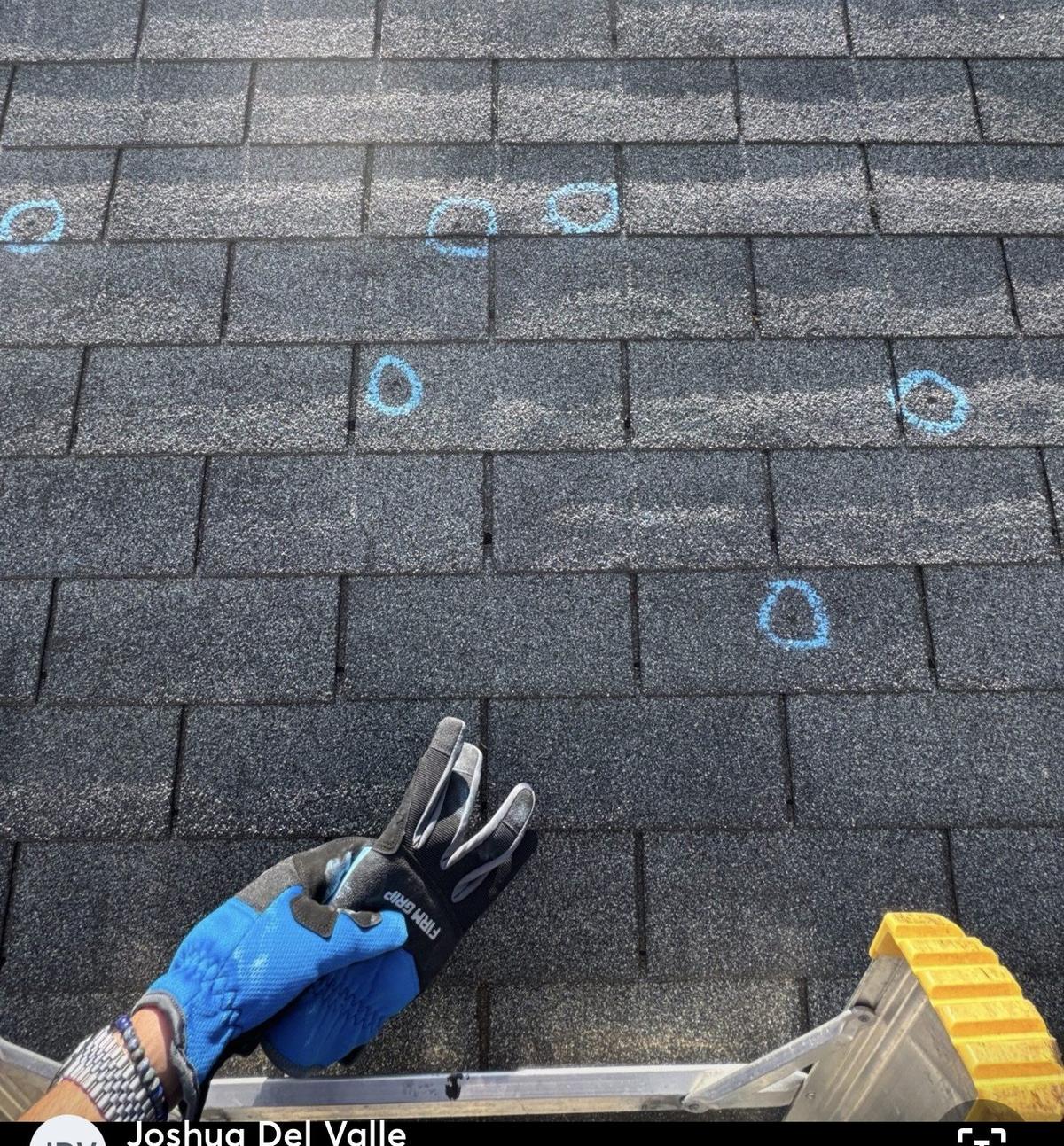
Hail damage on asphalt shingles with individual impact points circled in blue chalk during a roof inspection
Impact points, chalkedMultiple discrete hail strikes circled in blue chalk, each showing granule loss and exposed asphalt at the strike, plus lateral granule-loss streaking between courses.
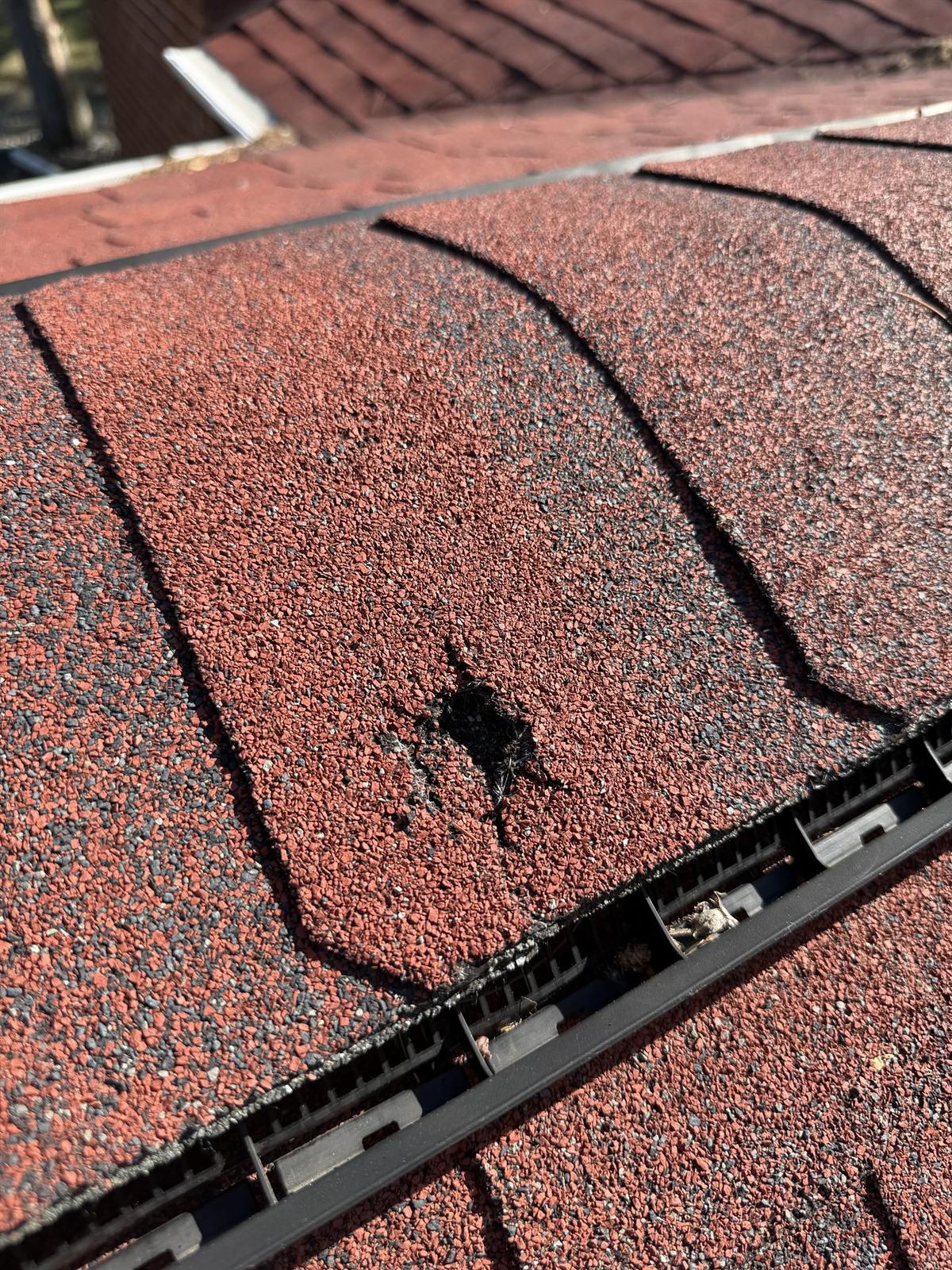
Close-up of hail damage on a red asphalt shingle showing granule loss and exposed black mat from a hail impact
The textbook bruiseA circular strike with complete granule loss at the centre and exposed, fractured black asphalt mat — the classic signature adjusters look for.
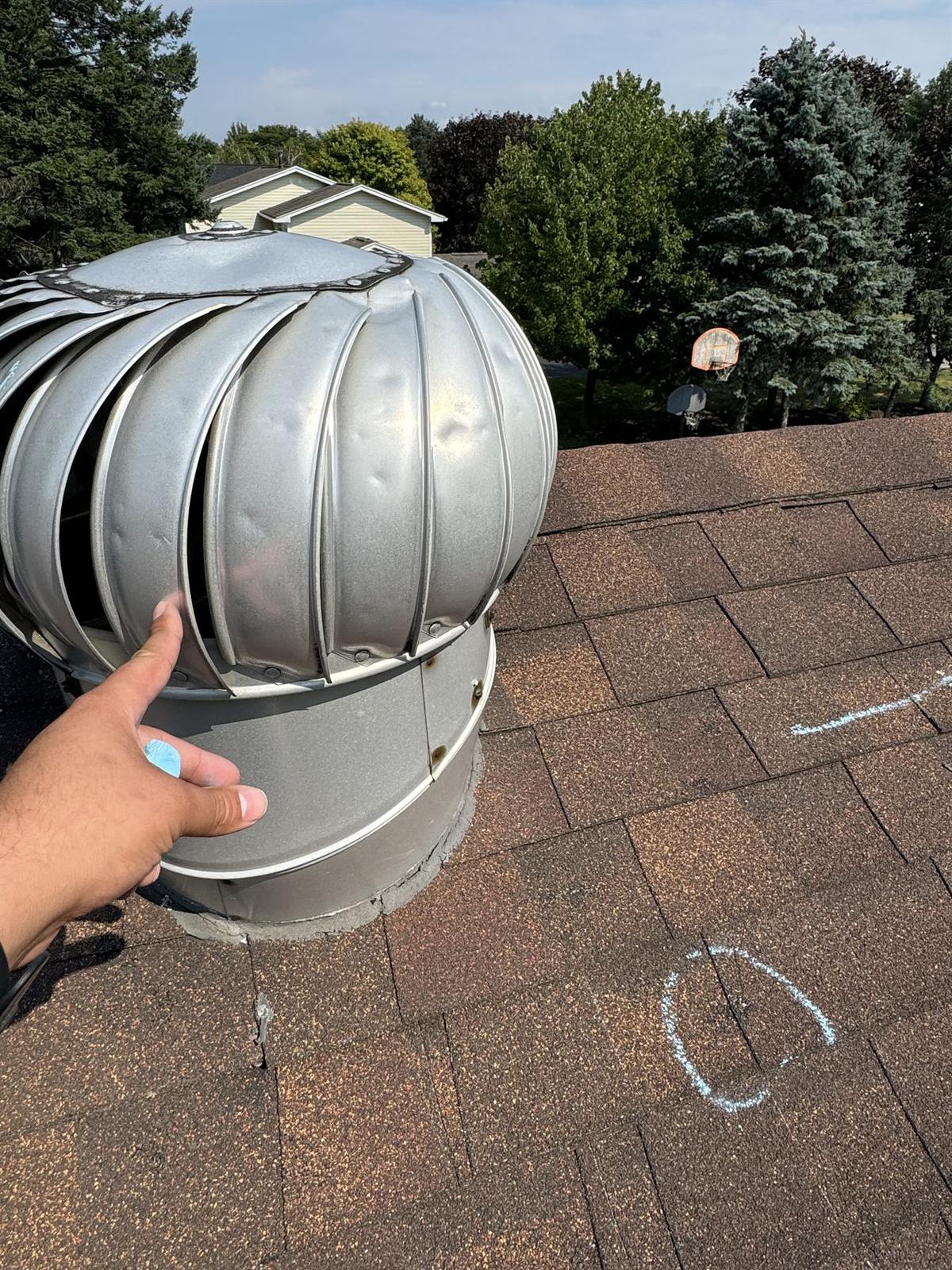
Hail-dented turbine attic vent held during a roof inspection with chalk-marked hail impacts on the shingles behind it
Soft metalsRounded dents across a turbine vent's dome and louvers. Soft metals dent before shingles bruise, which makes them the fastest confirmation that hail actually fell here.
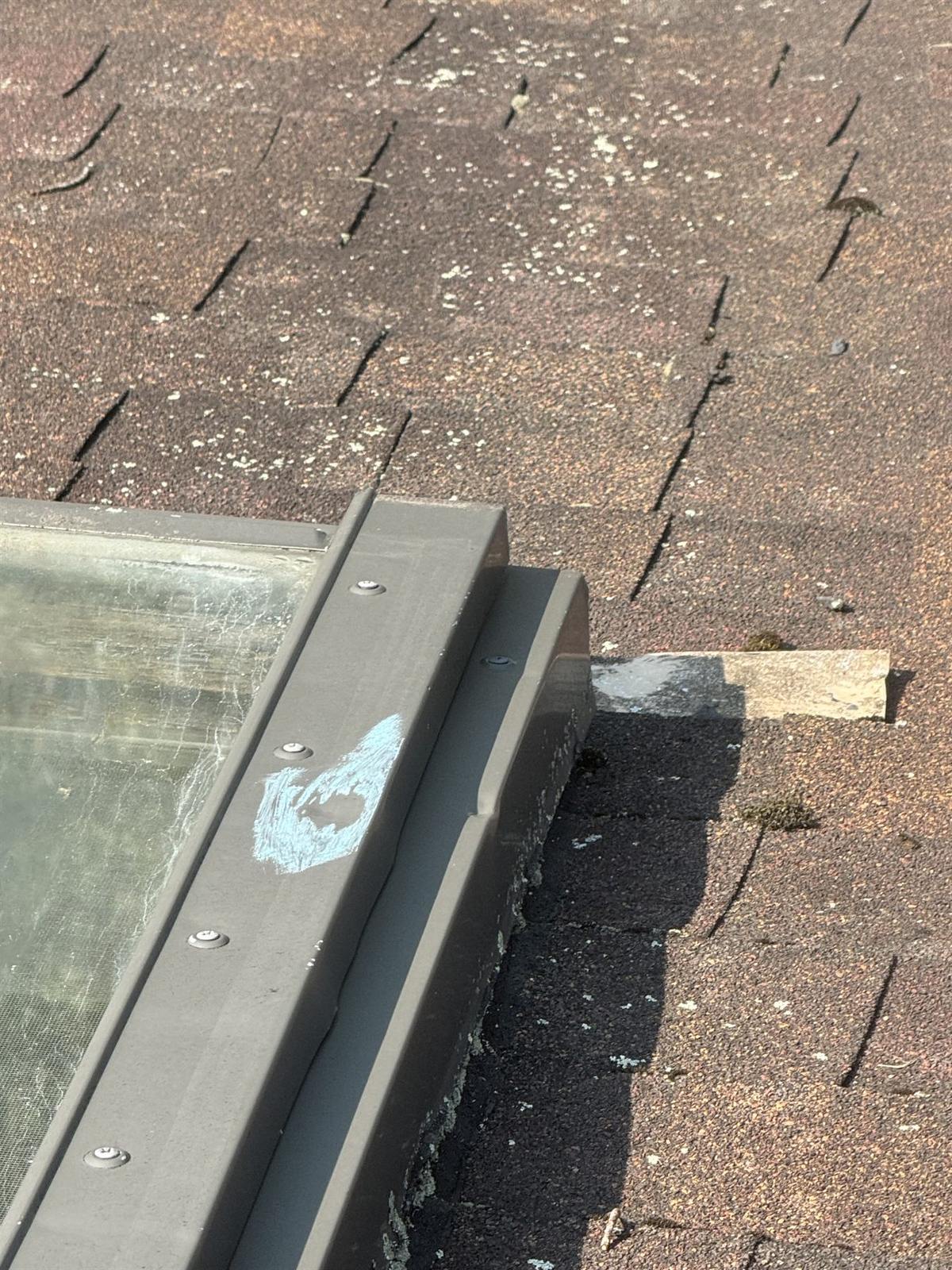
Chalk-circled hail impact on skylight flashing with granule loss and lifted shingle edges on a storm-damaged asphalt roof
Flashing and penetrationsA chalk circle around a dent in skylight flashing apron, with surrounding shingles showing mottled granule wear.
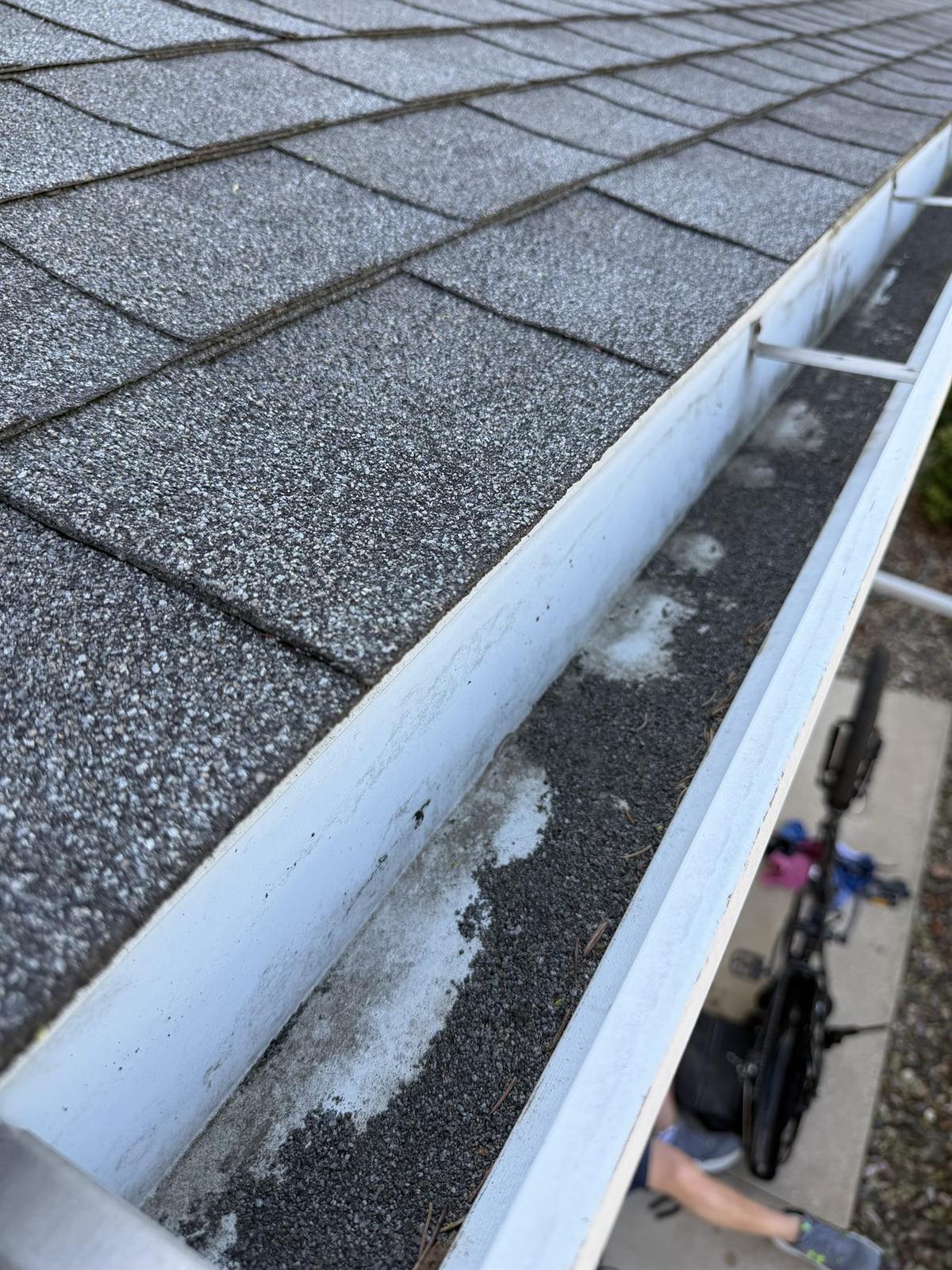
Asphalt shingle granules accumulated in a gutter showing granule loss from hail damage and shingle wear
Granules in the gutterA thick dark band of accumulated granules running the length of the trough. On its own it is wear; alongside chalked strikes it corroborates the loss.
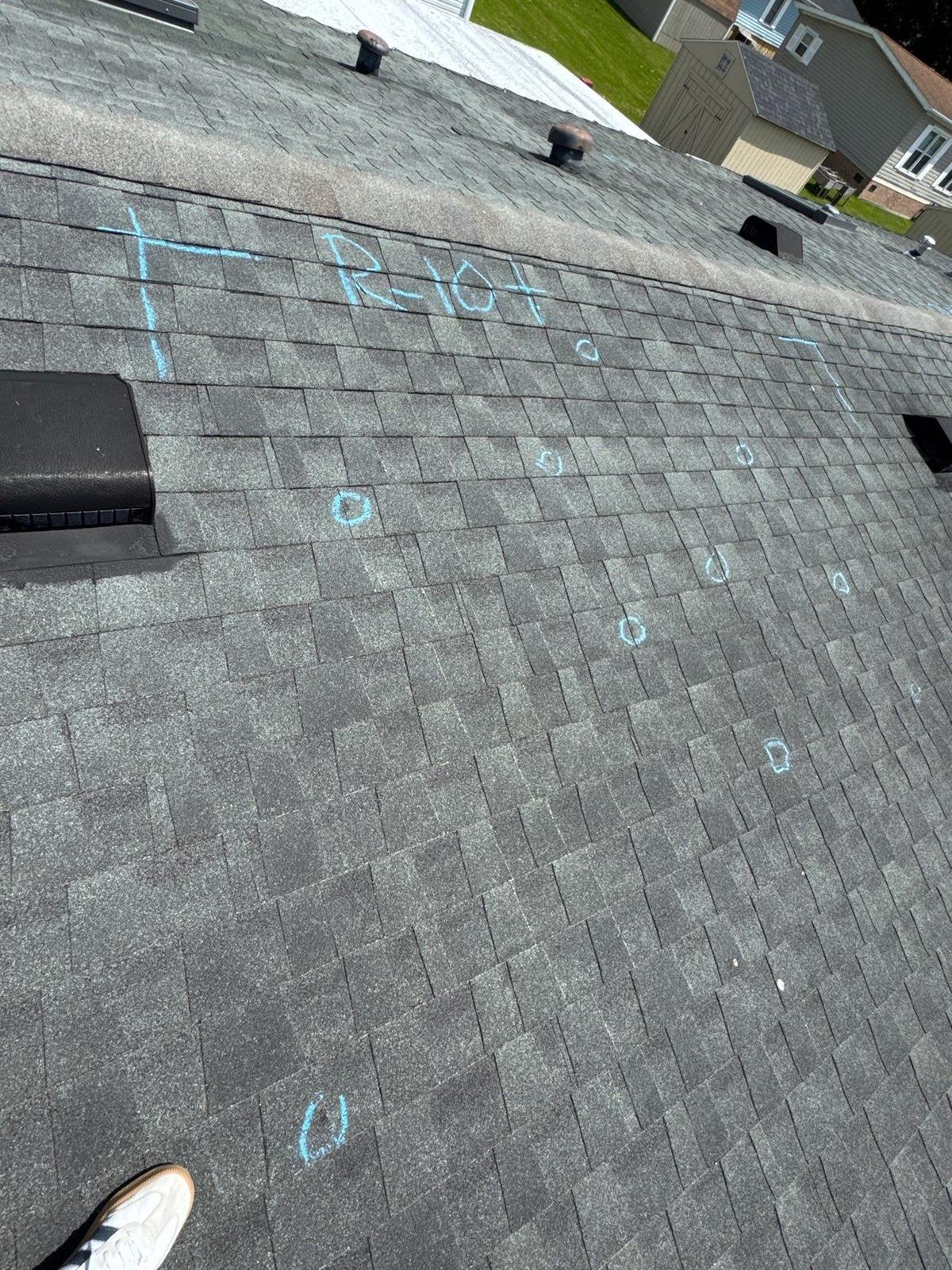
Hail damage inspection on a gray 3-tab shingle roof with blue chalk circles marking individual hail impacts inside a marked test square
The test squareA chalked boundary with the strikes counted inside it and the slope labelled — here, R-10+. This is the measurement an adjuster actually scores, and it is why we chalk before anyone else arrives.
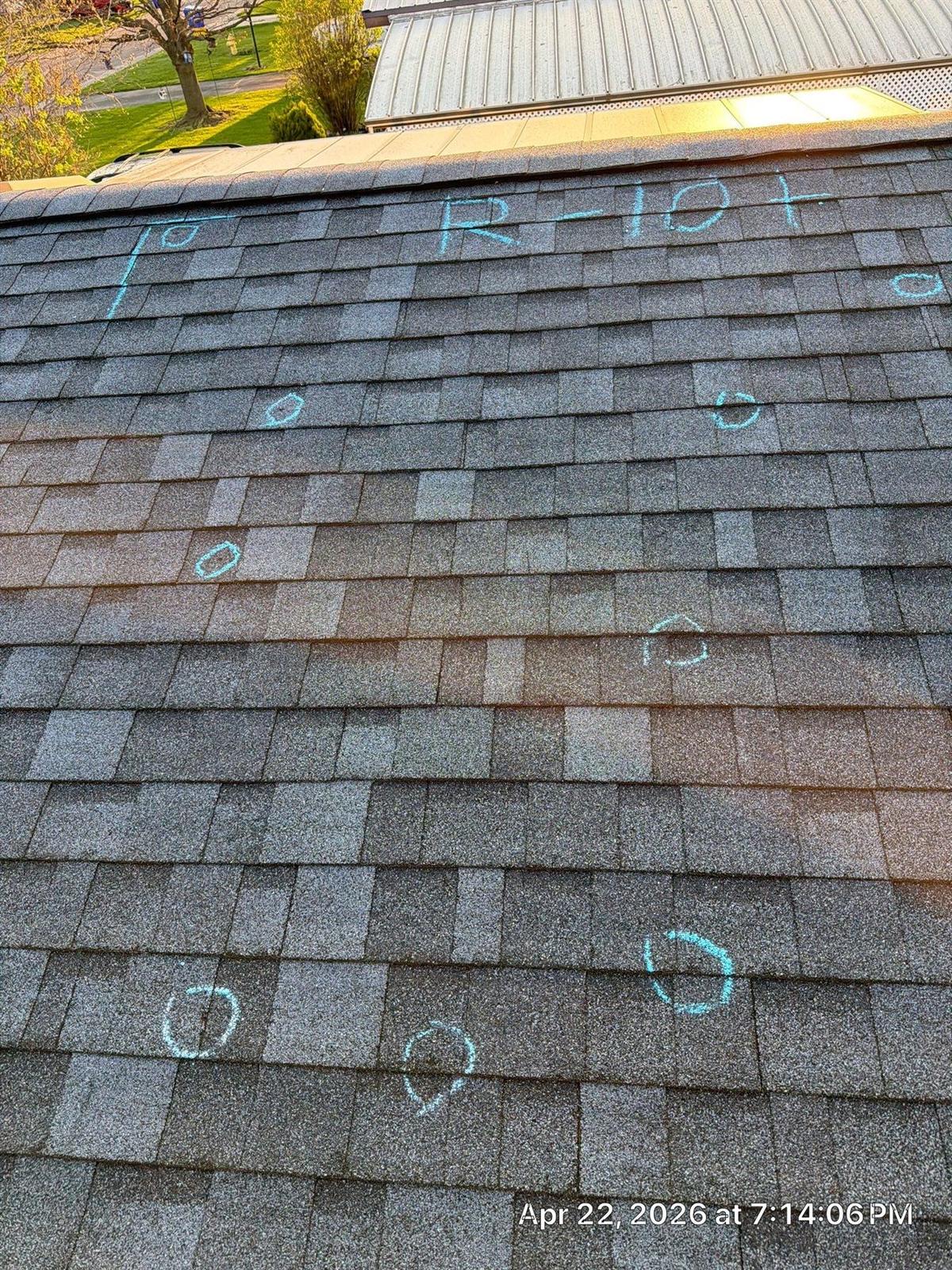
Blue chalk circles marking hail damage impact points on a residential asphalt shingle roof during a storm damage inspection
Counted and labelledRoughly ten strikes circled across the upper courses of a 3-tab slope, with the count chalked large enough to read in a photograph.
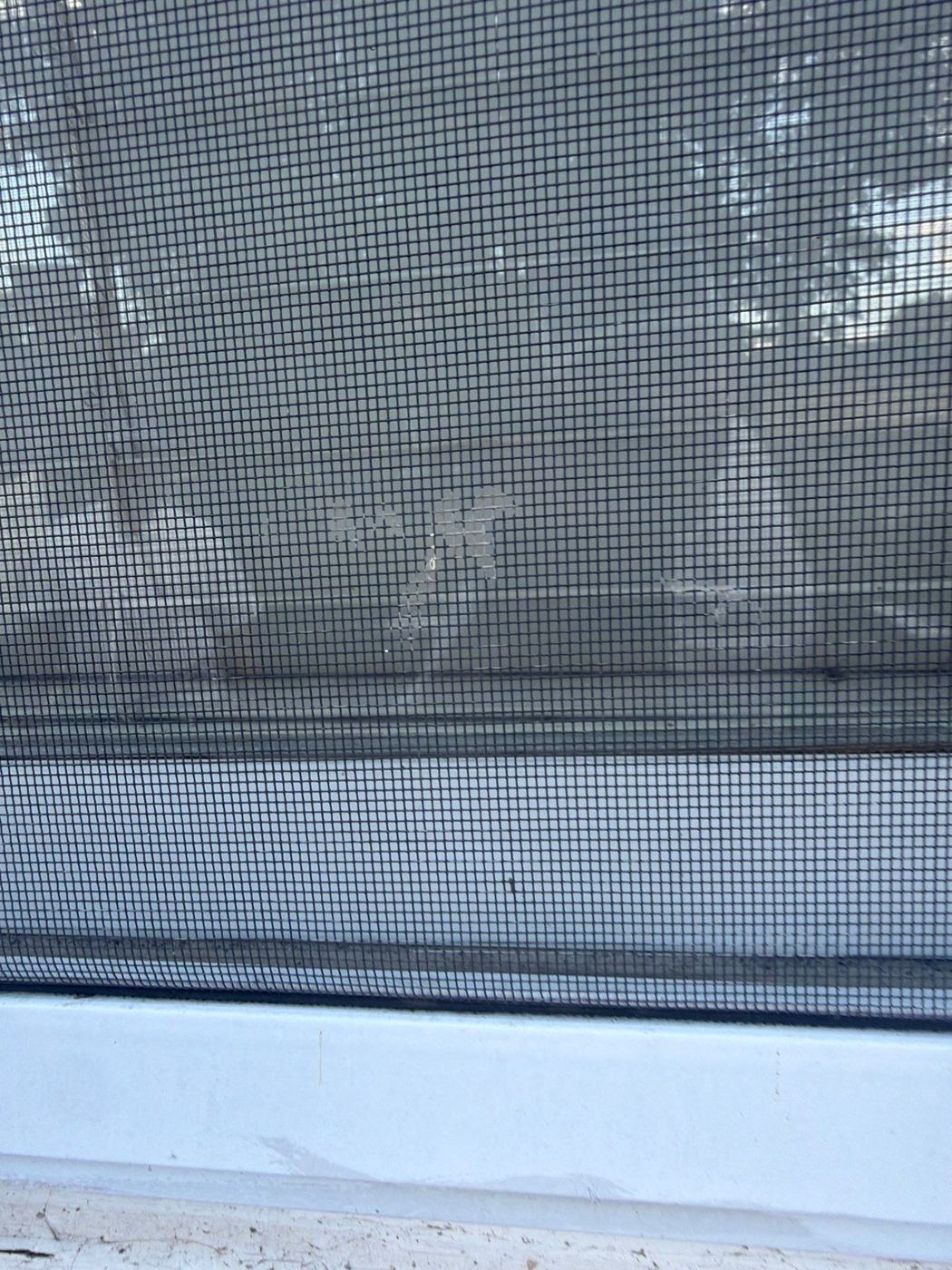
Window screen dimpled and pushed out of weave by hail impacts, photographed from inside during a roof inspection
Window screensImpact points visible in the mesh where stones pushed the weave out of plane. Screens face the weather on one elevation only, so they show a storm’s direction of travel.
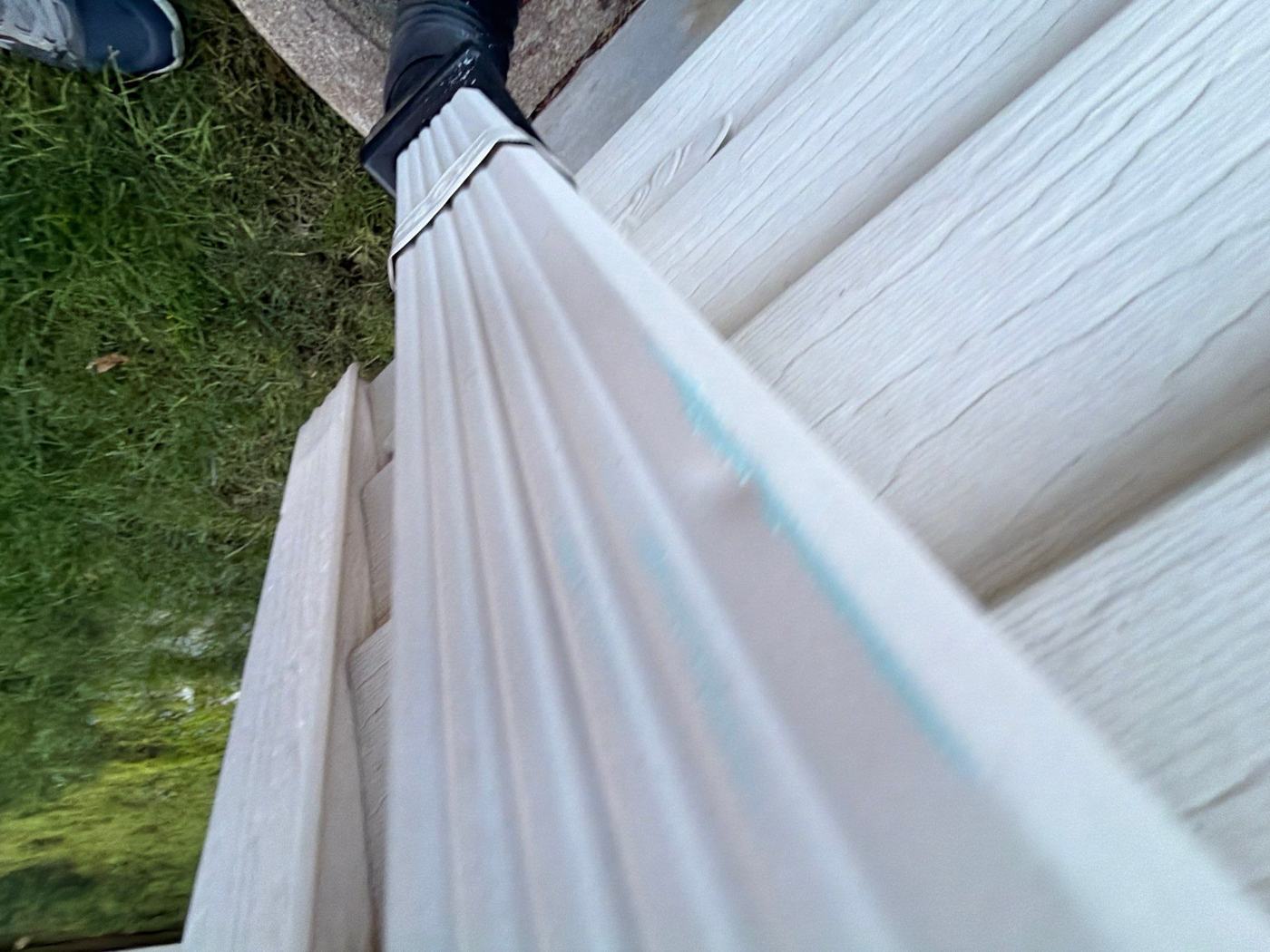
Downspout with a hail dent marked in blue chalk during an Eversafe roof inspection
Dented downspoutsA dent chalked on the downspout face. Aluminium takes an impression at a lower energy than a shingle does, so a marked downspout confirms hail fell here before anyone gets on the roof.
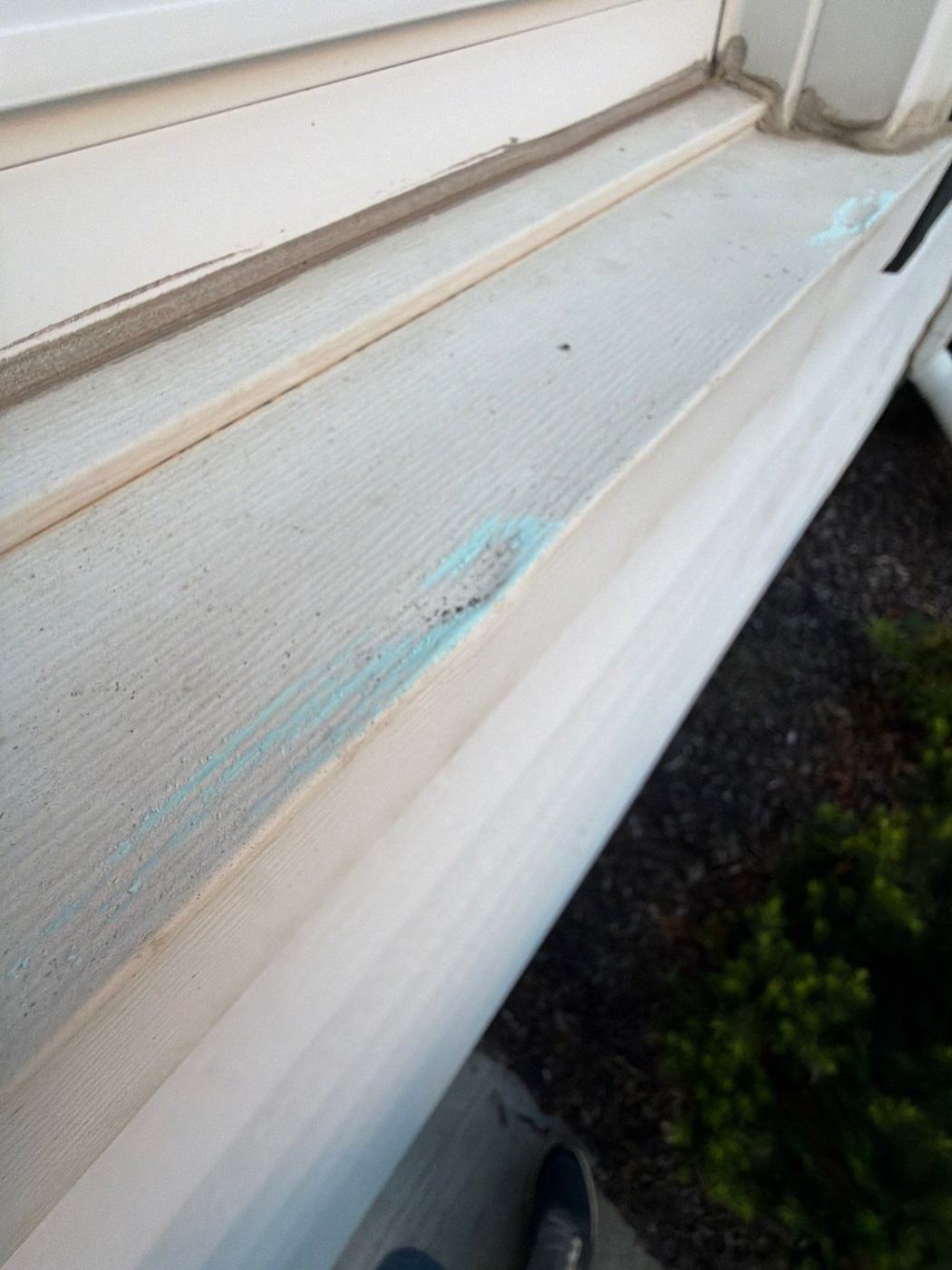
Chalk-marked hail dents along wrapped fascia metal above a gutter run
Dented fascia metalChalk along the fascia wrap where the metal has taken impressions. Soft metals like this and the gutter below are the fastest corroboration on an elevation.

Actual reported sizes

This is what came out of the sky.

Everyone says “quarter-size hail” and nobody pictures it. Drawn against each other at true scale, the difference stops being an abstraction. Every one of these is a real National Weather Service report from a market we work in.

4″ — SoftballReported four miles east of Maple Bluff on April 14, 2026 — tying the largest hail ever recorded in Dane County.

Wind

The types of wind damage.

Wind does not fail a roof evenly. It finds the edges — rakes, eaves, ridges — and works underneath.

01

Creased or folded shingles

A permanent transverse crease where the tab was bent back on itself and did not recover.

The signature wind finding — and often subtle. HAAG's lab testing at 175 mph produced creases on new shingles that took close inspection and hands-on manipulation to find.

02

Missing shingles

Whole shingles or tabs gone, usually along rakes, eaves, and ridges.

The one kind of damage you genuinely can see from your driveway.

03

Torn shingles

Tabs broken or torn away, often around a fastener.

Frequently found where nails were placed too high, which is an installation issue the wind then exposed.

04

Damaged ridge cap

Lifted, displaced, or missing caps along the peak.

The ridge takes the most wind of any part of the roof, and cut-up field shingles used as cap fail here first.

What that looks like on a real roof

An example from one of our inspections, so the descriptions above have something to attach to.

Storm debris including snapped leafy limbs piled at the curb in a residential neighborhood after a high-wind event
High-wind event, same streetFresh green storm debris — snapped leafy limbs piled at the curb — indicating recent high-wind activity in the neighbourhood. Corroborating evidence, not roof damage itself.
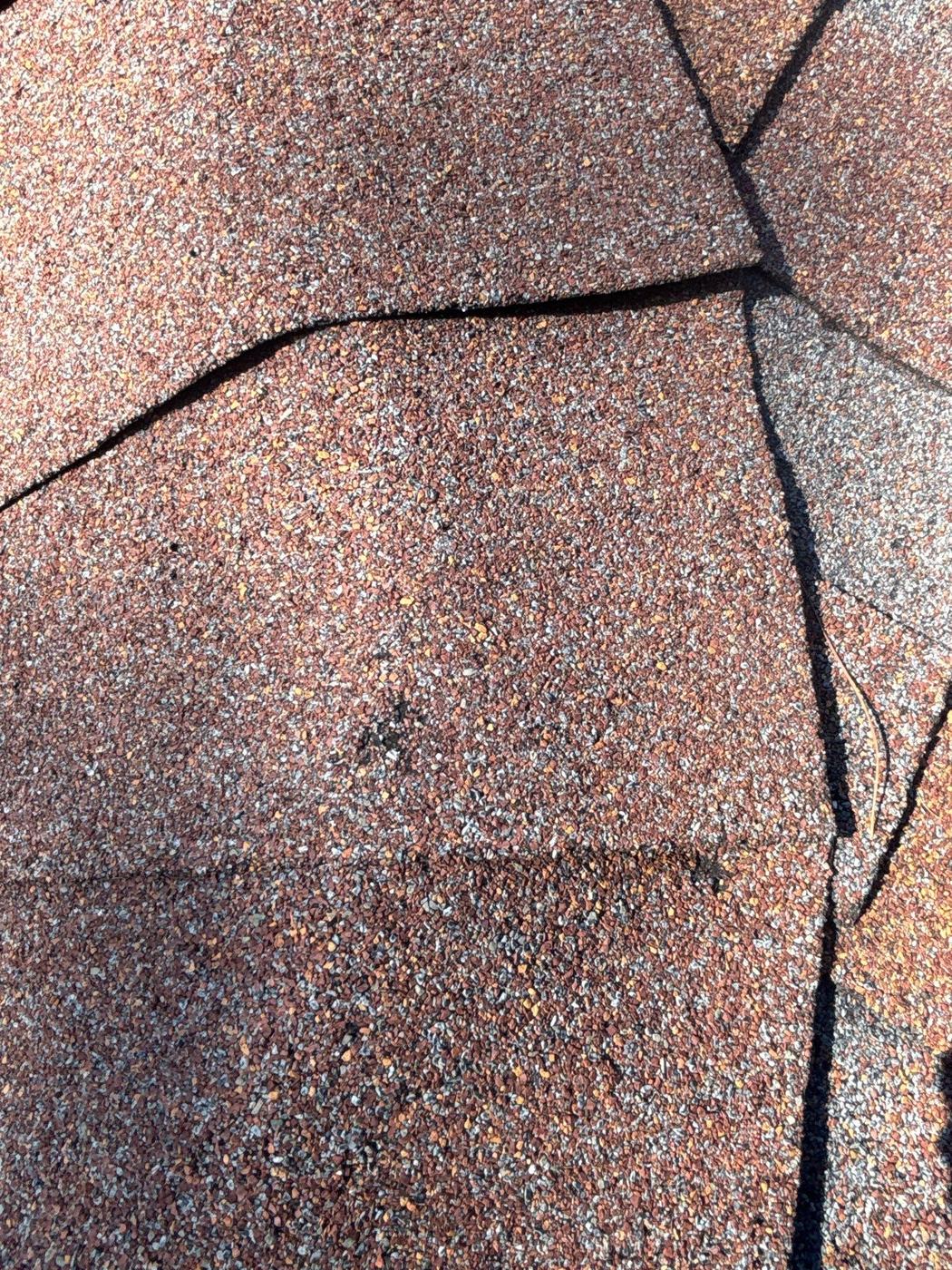
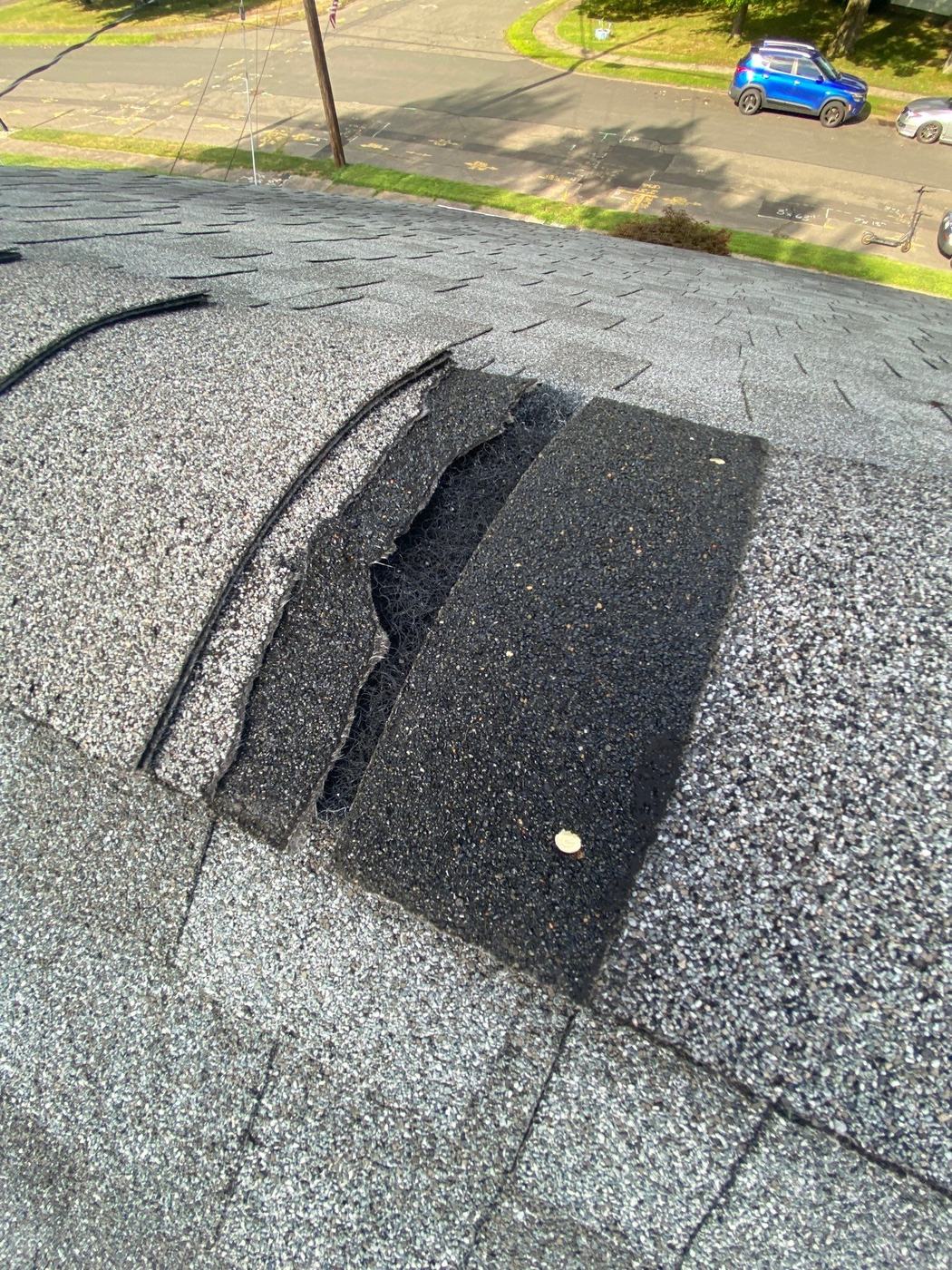
Creased asphalt shingle with a transverse fold line across the tab and a lifted, separated edge after a wind event
Creased shingleA fold line running across the tab with the edge lifted and no longer sealed. Once the seal strip breaks the tab will not lie back down, which is what makes creasing a permanent failure rather than cosmetic.
Shingles torn away from a roof hip by wind, exposing the underlayment and course beneath
Missing shingles from windTabs torn clean off along the hip, exposing what sits underneath. Wind finds the edges first — rakes, eaves and ridges — and works beneath from there.

Before you file

What gets mistaken for hail every season.

Blistering, foot-traffic marring, adhesive spots, and backed-out nails all get mistaken for hail. Knowing the difference before you file is what keeps a claim from being denied.

Blistering

Gas escaping the asphalt leaves small craters that look like impact points — but they have no fractured mat underneath and no directional pattern.

Foot-traffic marring

Granule scuffing in walkable paths across the slope. Follows where people walked, not where hail fell.

Manufacturing and wear conditions

Cupping, clawing, granule flaking, and thermal splitting are maintenance conditions, not storm damage — and every policy excludes them. This is the most common denial by a wide margin.

Backed-out nails

Fasteners working loose over time push a bump up through the shingle above. An installation and age issue, not a storm one.

Free, and no obligation

Find out what you actually have.

We run test squares on every slope, photograph what we find, and hand you the report — yours to keep whether you hire us or not. Then we tell you straight whether it is worth filing, including when we think it isn't.

Book a free inspection

We run test squares on every slope and photograph what we find — including when we do not think it is worth filing on.

Free, and no obligation. You keep the photo report either way — including when we tell you we do not think you have a claim.

Serving Bristol, Farmington, New Britain, Plainville, Southington, West Hartford and homes across Hartford County and all of Connecticut.

Call (860) 849-4313 Free inspection