 Eversafe Roofing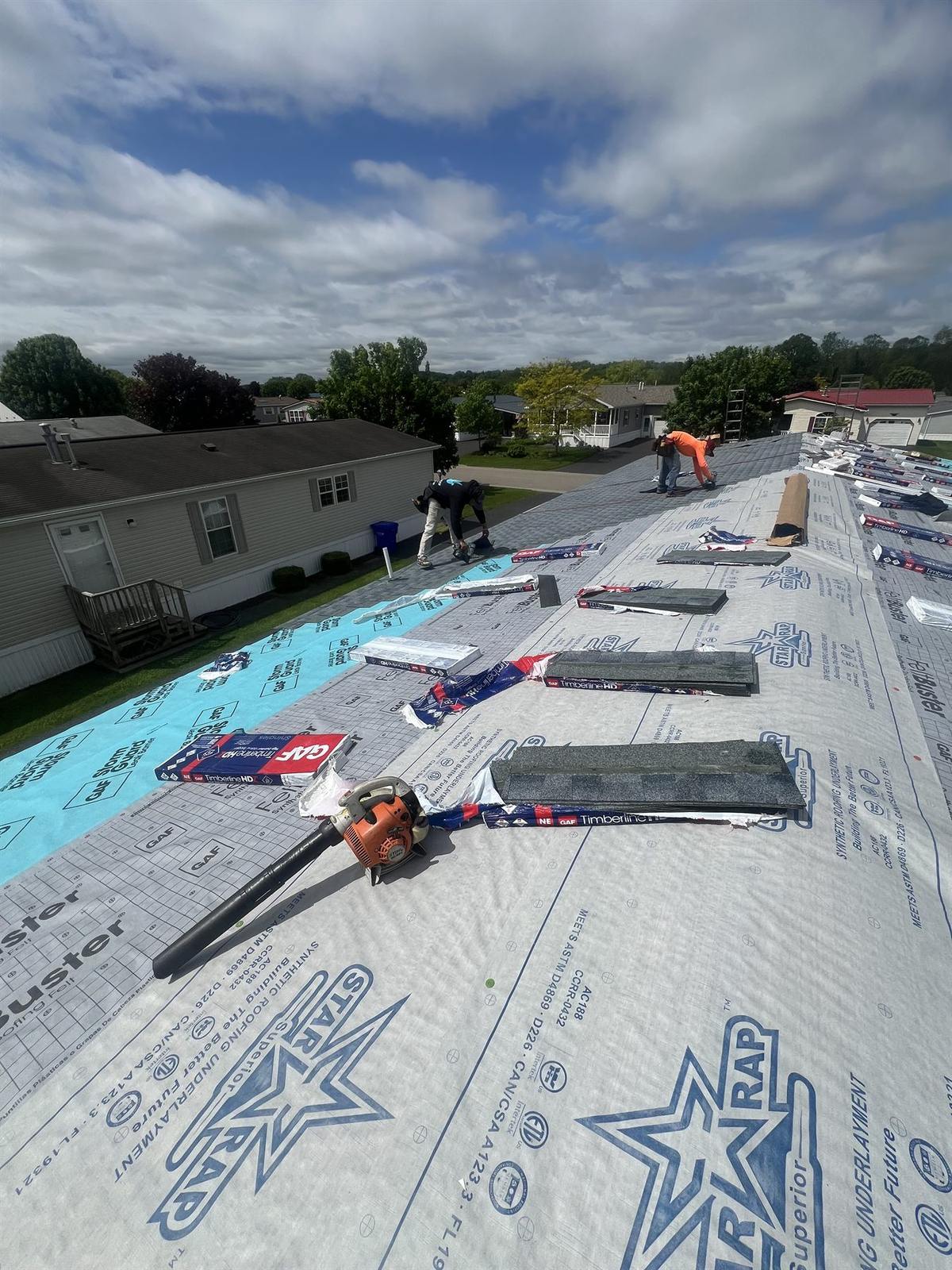
Stage 01
Protection
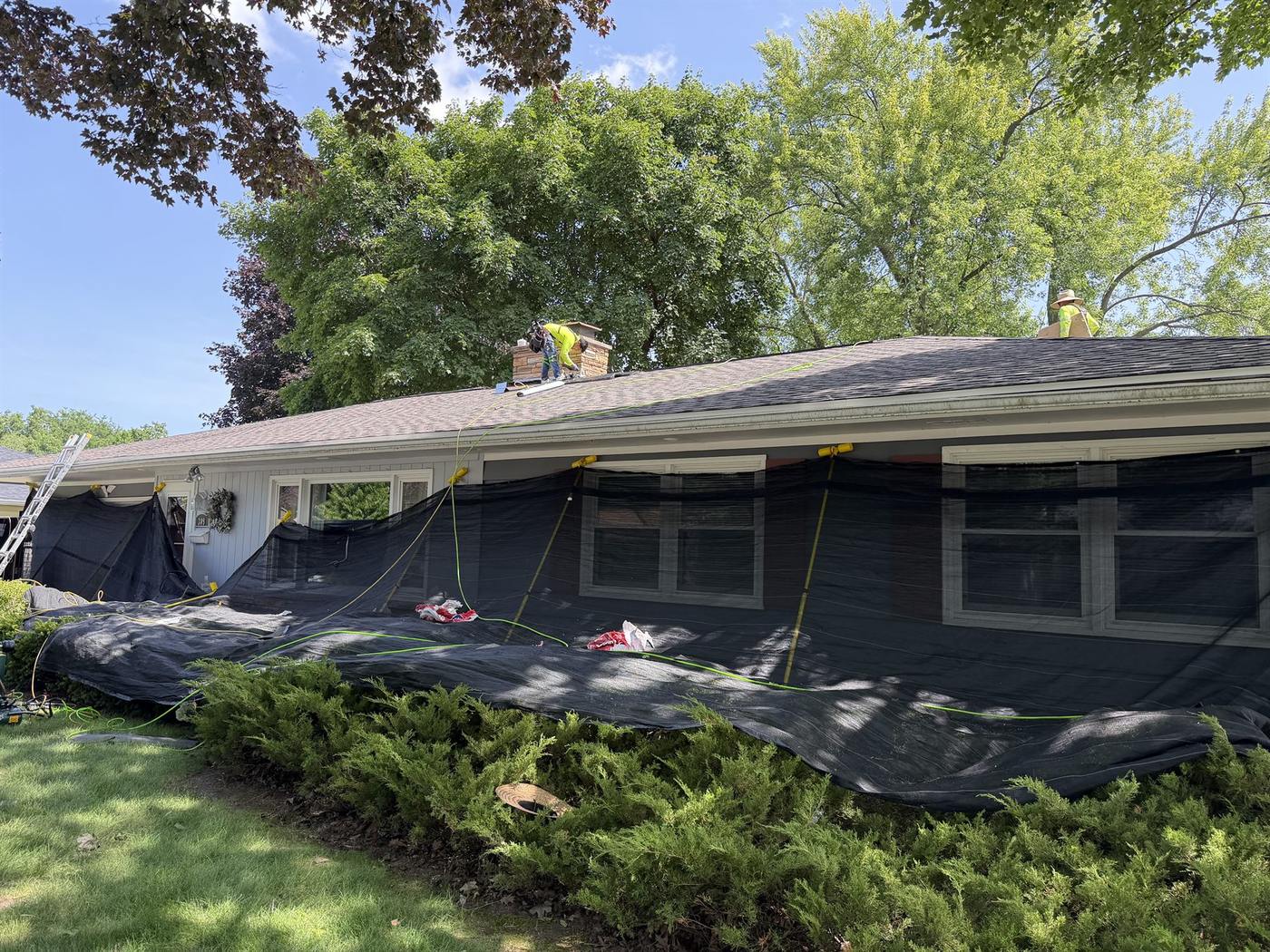
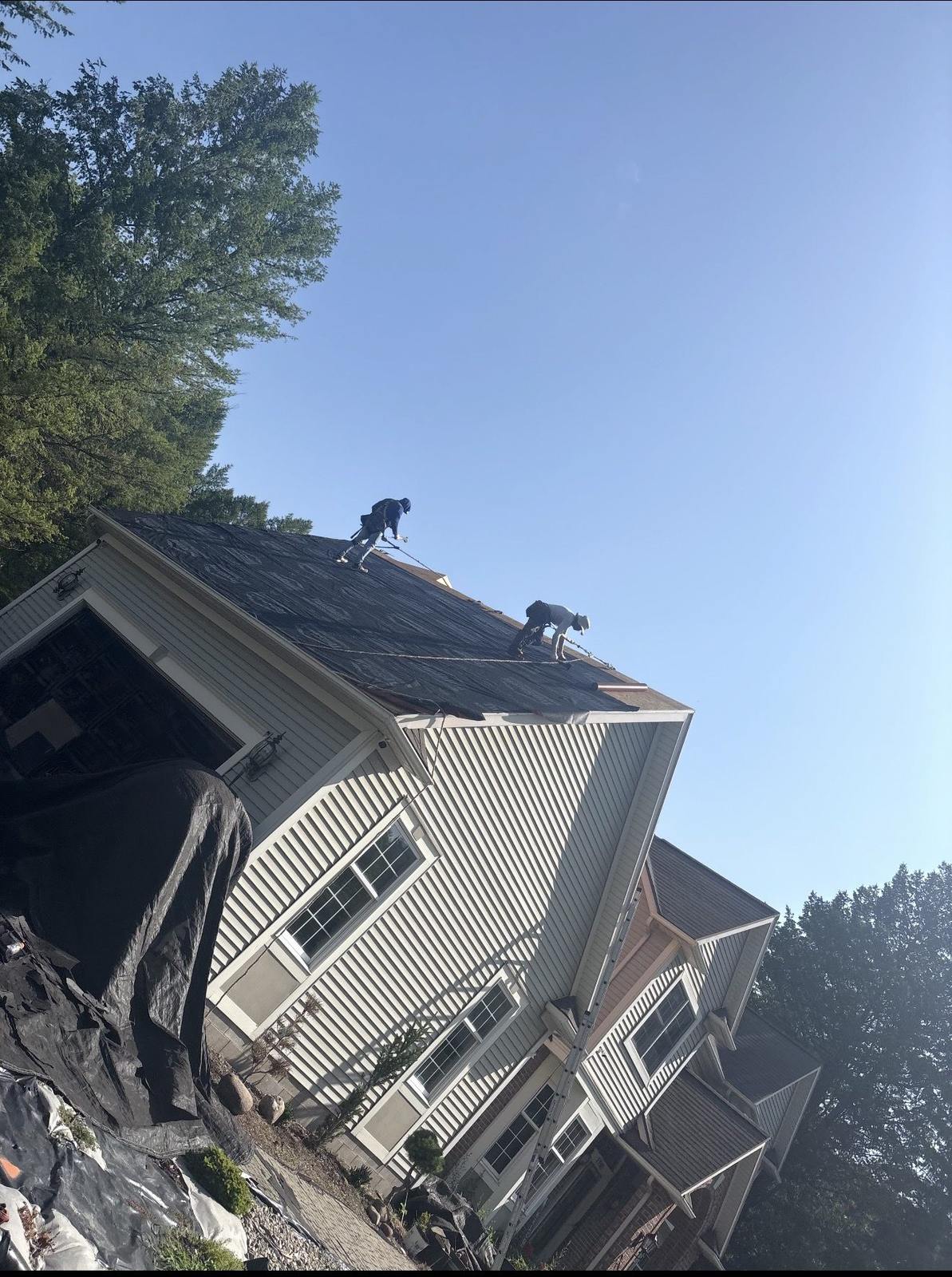
Tarps over the siding, the landscaping, and the windows. Plywood where a dump trailer has to sit. This is the stage most companies skip photographing, which is why it is the first one we do.
Photo documentation
A roof is the rare thing you pay for and never stand on. That is exactly why bad work gets sold as good work — and exactly why we photograph every job from the first inspection to the final walkthrough.
How the record gets made
Photos are taken on the roof as the work is happening, tagged to your address, and time-stamped by the app rather than by whoever is telling the story afterward. You do not have to ask for an update and you do not have to take our word for anything.
That matters most for the parts of a roof that get covered up. Leak barrier at the eaves and valleys, a sheet of decking that had to be replaced, the number of layers that came off — once the shingles are on, none of it can be verified by anyone standing in the driveway. Photographed as it happened, all of it can.

Every photo is stamped with the date, the time, the GPS location, and who took it — by the app, not by us.
We run CompanyCam on every job, and we can hand you the whole photo record for your address — live as the crew works, or as a finished set once the job is done.
Every job, start to finish
Before a single shingle comes off, your house gets wrapped. Then every layer goes on camera as it goes down.
Tarps over the siding, the landscaping, and the windows. Plywood where a dump trailer has to sit. This is the stage most companies skip photographing, which is why it is the first one we do.
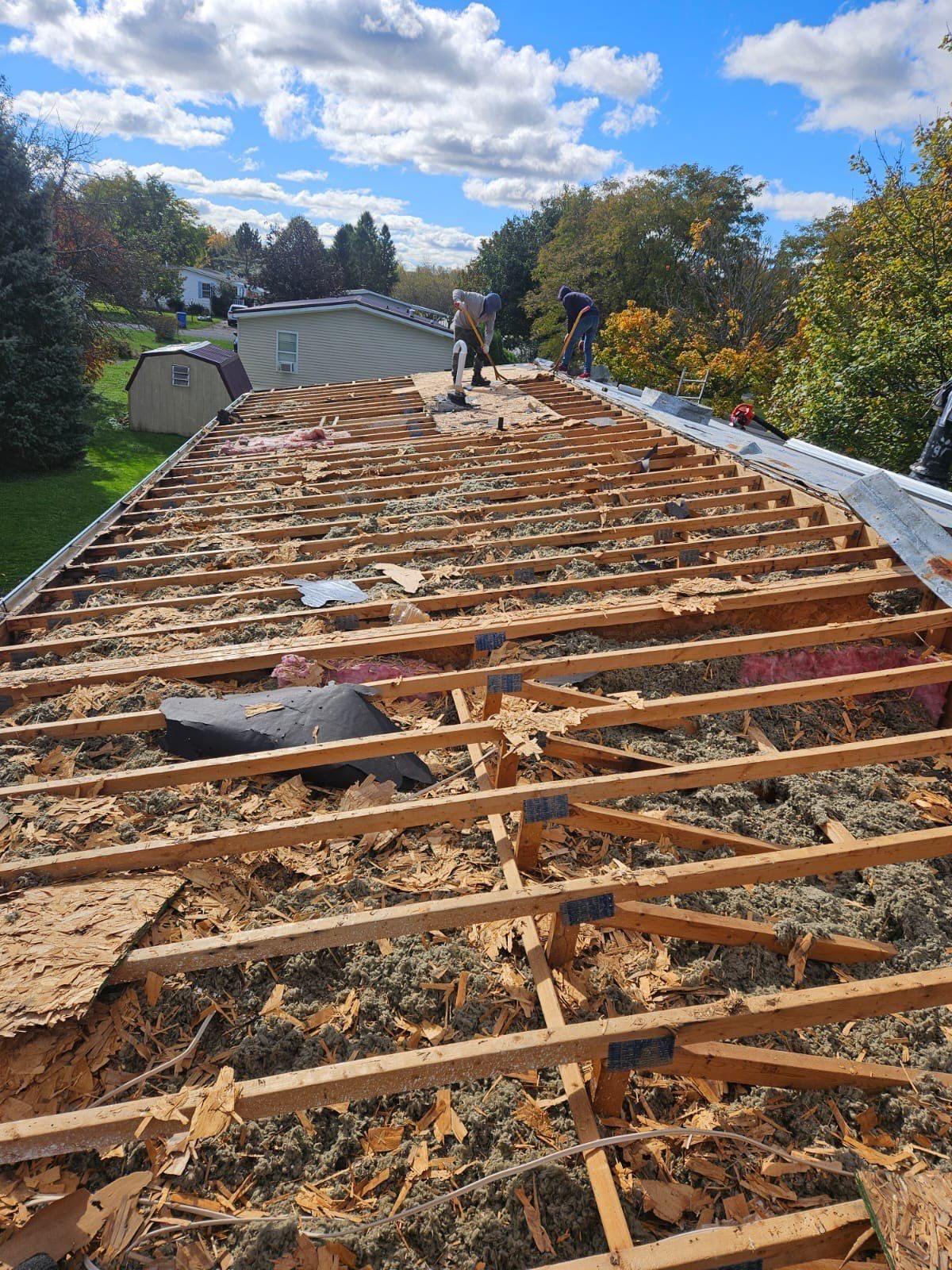
Everything comes off down to the decking, and the deck gets inspected for rot, delamination, and fastener failure. If sheathing has to be replaced, you see exactly which sheets and why — before it disappears under underlayment.
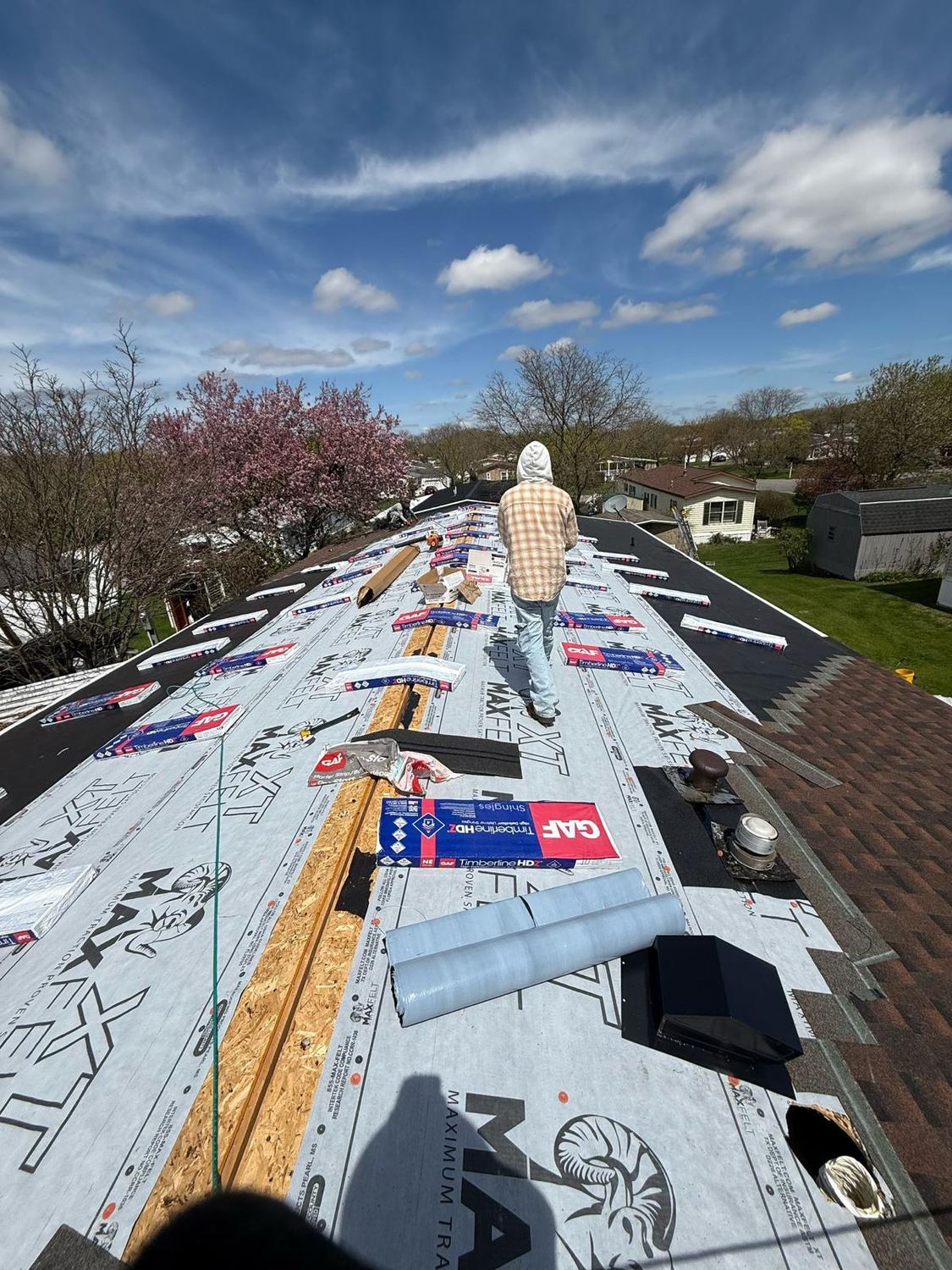
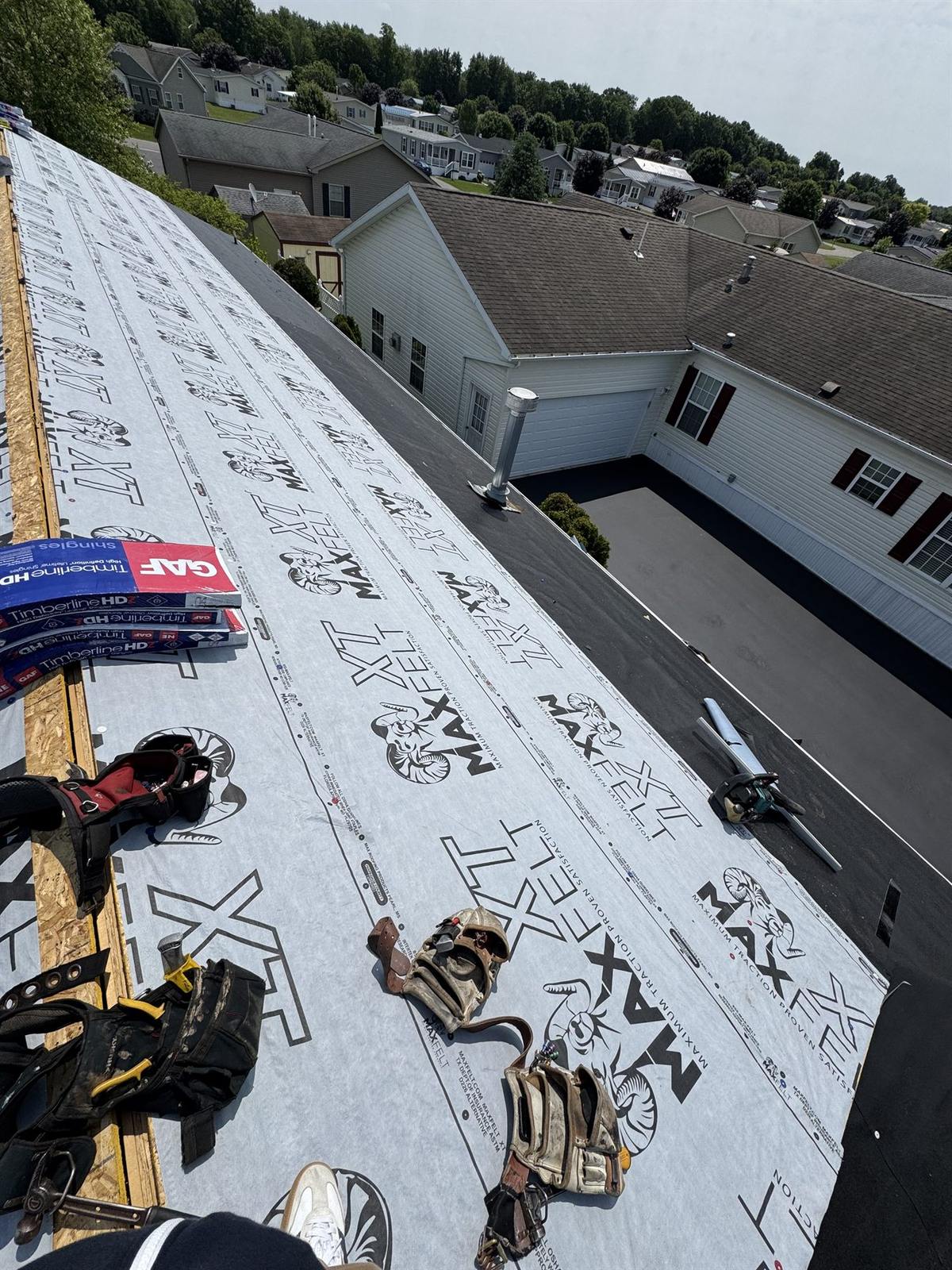
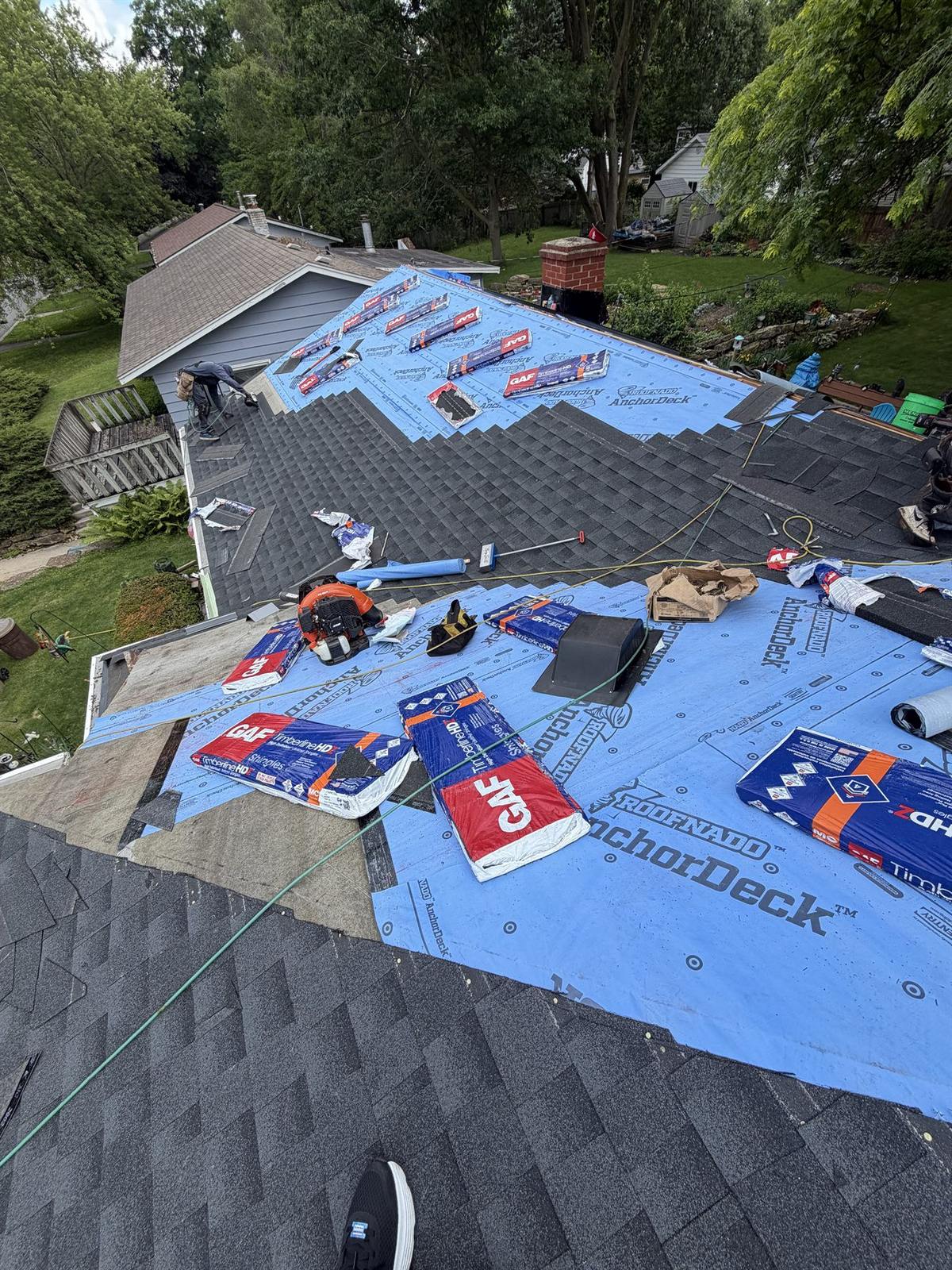
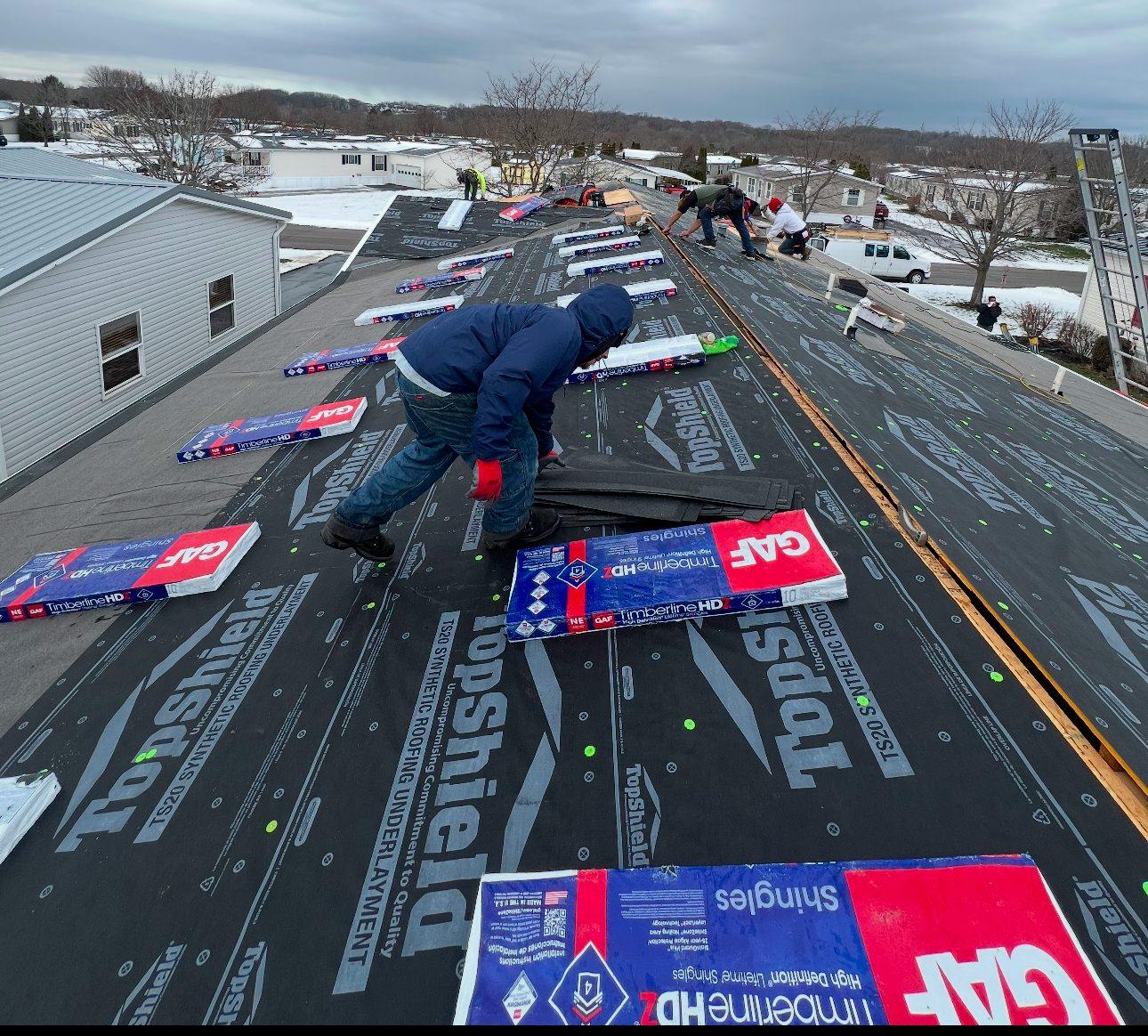
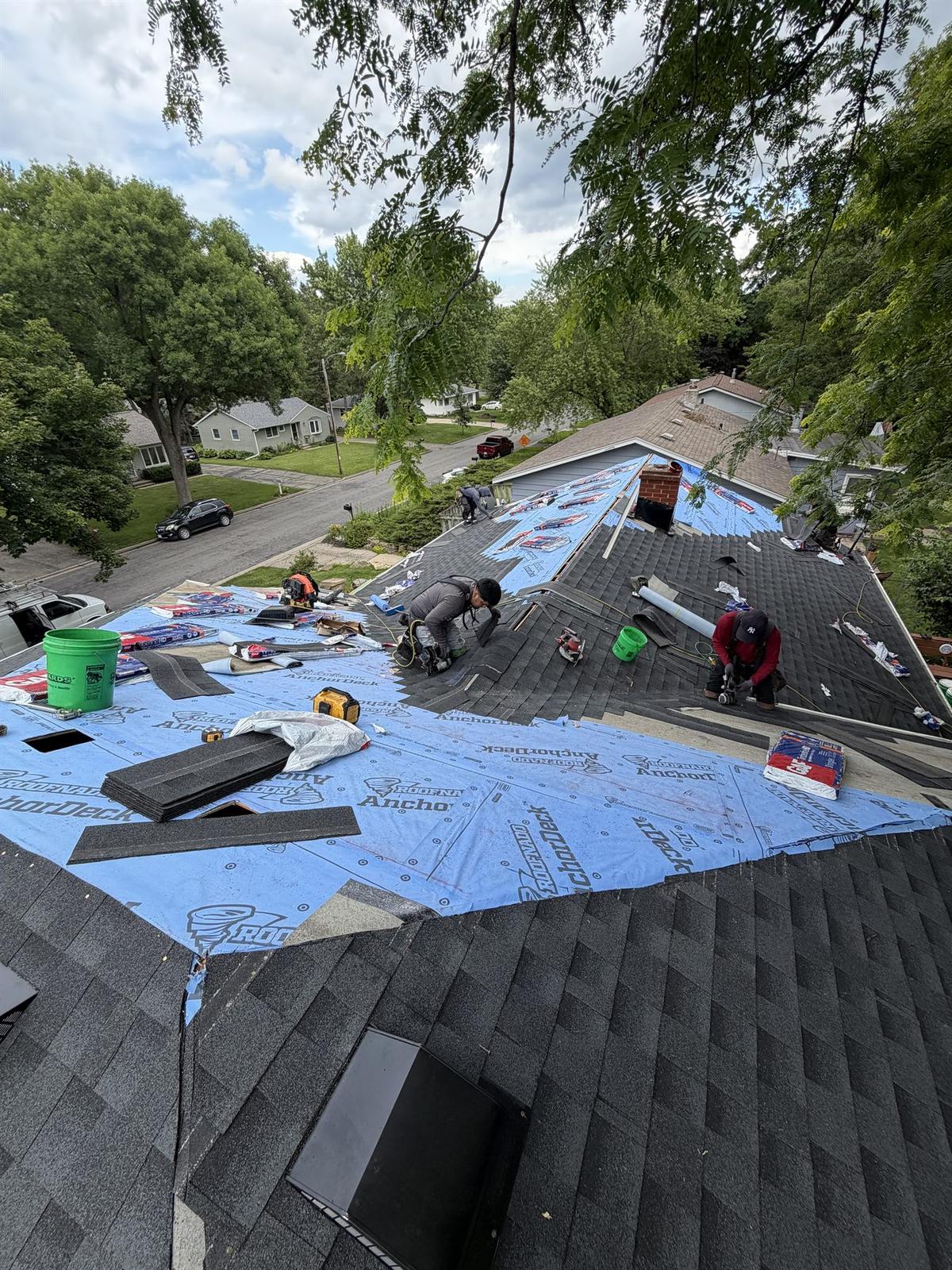
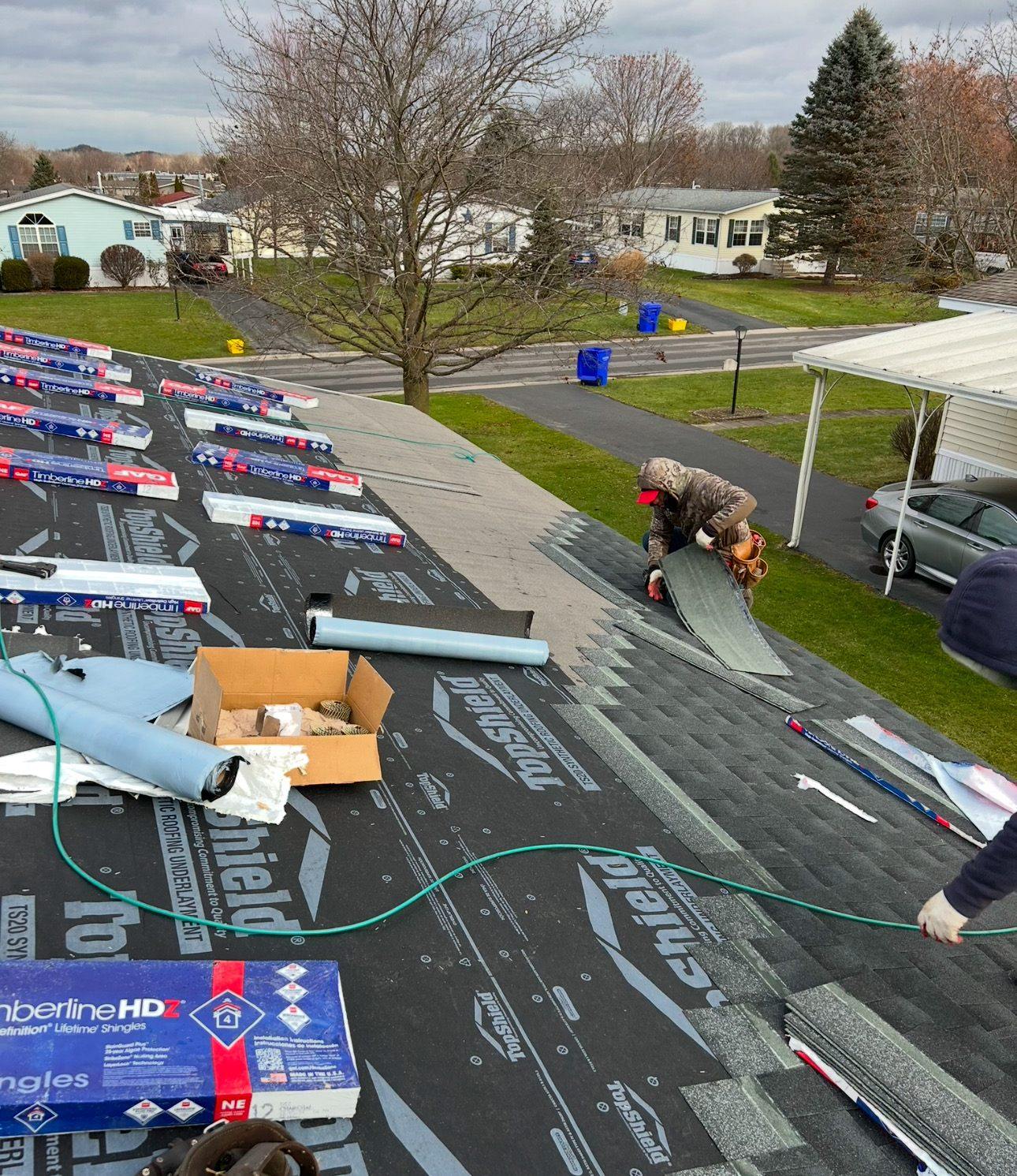
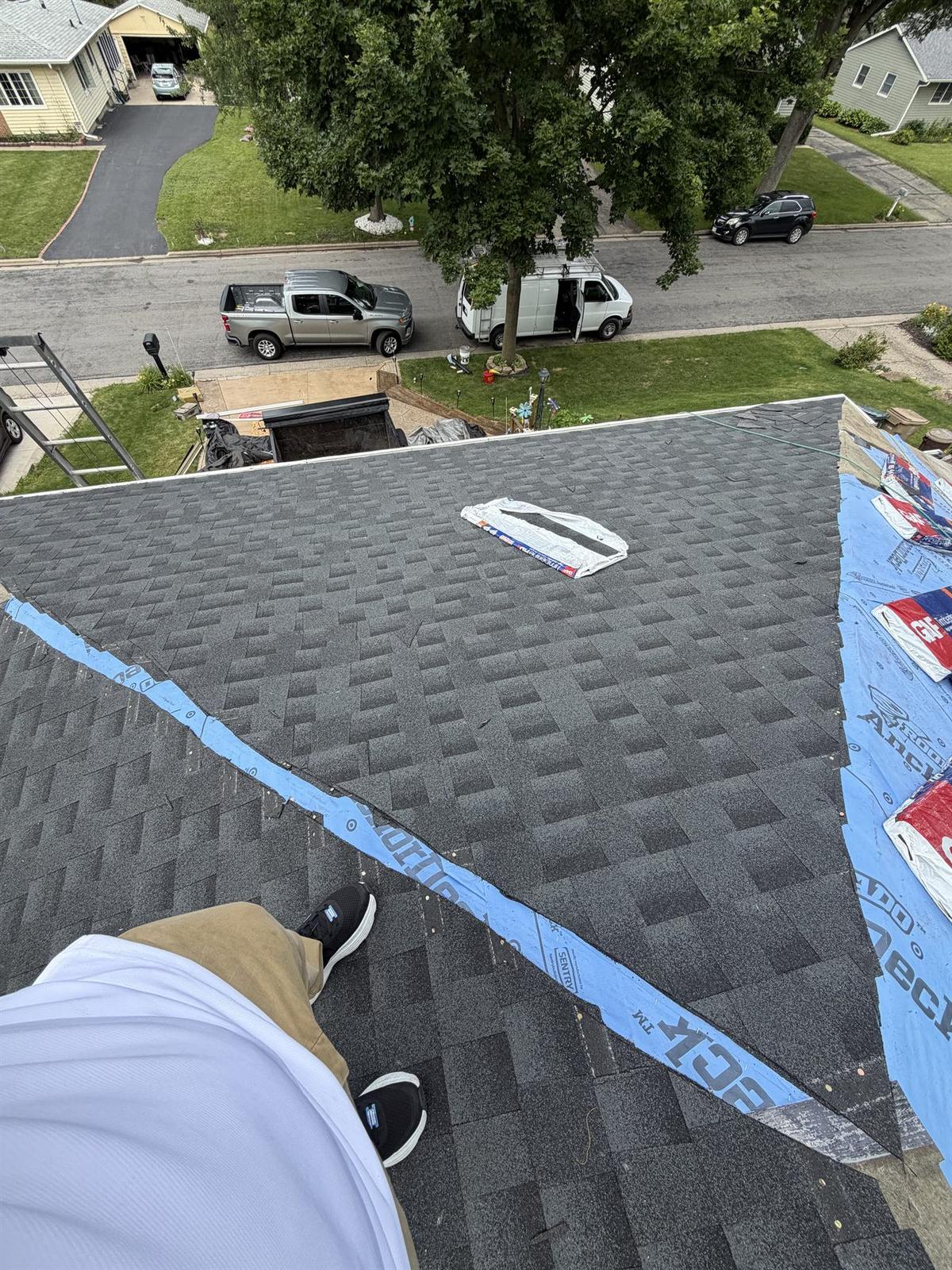
Leak barrier at the eaves and valleys, synthetic underlayment across the field, and flashing set at every penetration. Drip edge metal goes on along every eave and rake, so water leaves the deck into the gutter instead of curling back behind the fascia. The ridge vent slot is cut open along the peak — you can see it in this photo, before the cap covers it — so the attic can exhaust at its highest point. Then the shingles cover all of it permanently. This is the last time anyone can see the layer that actually keeps water out.
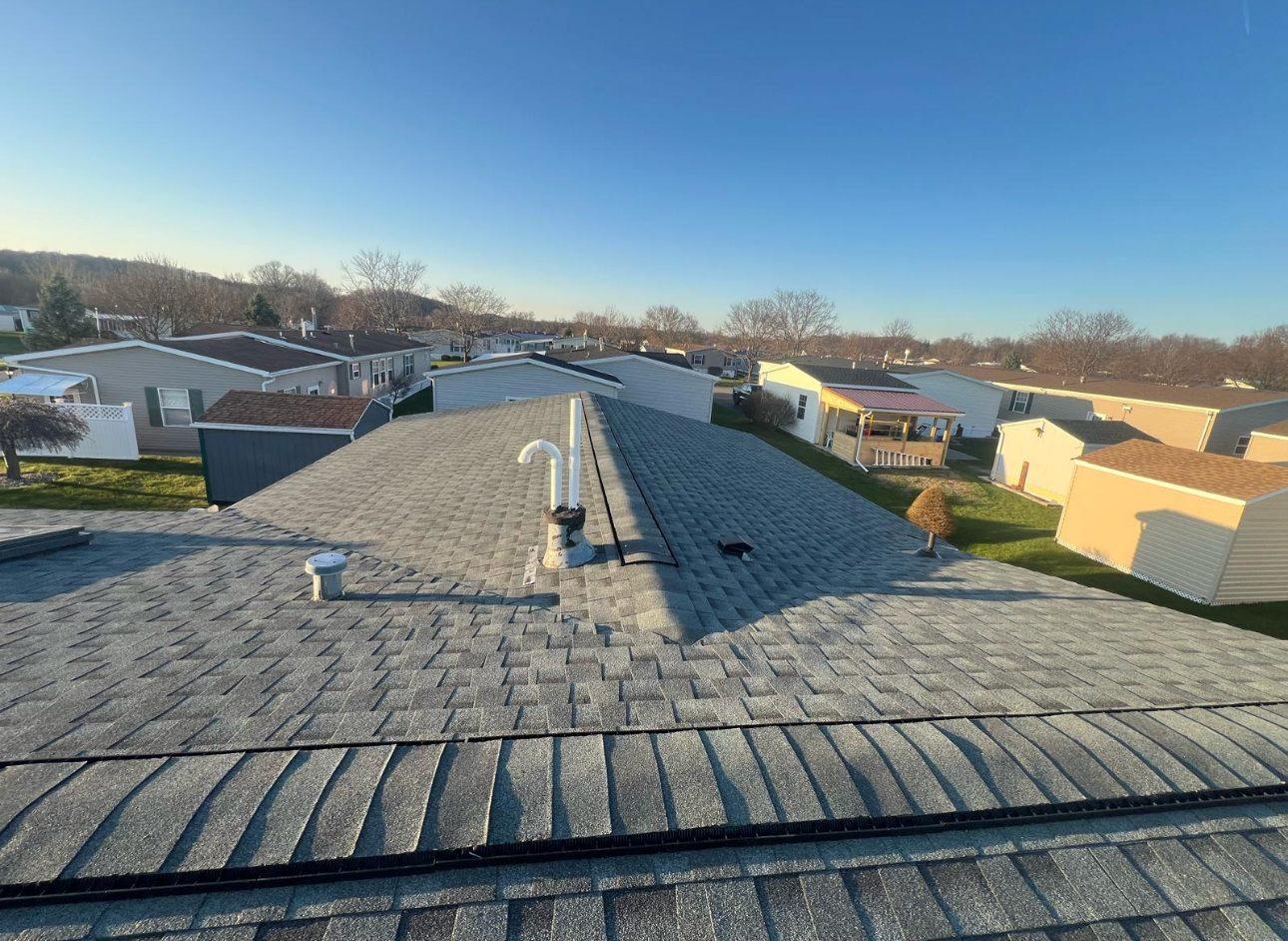
Straight courses, ridge cap along the peak and hips, penetrations flashed and booted, and a magnet sweep of the property before we leave. Photographed from the ridge and from the ground.
From the field
Homeowners on camera
Connecticut homeowners, filmed after the job was finished. Tap to play.
Reviews
Pulled live from our Google Business Profile, not retyped by us.
Free, and no obligation
You get the whole photo record, whether you hire us or not. It is your roof and your evidence.